Medical imaging
From detector signals to images.
X-ray, CT, PET and SPECT all rely on the same detector physics - photons stopped in a crystal and turned into light or charge. These pages show how the signals from many detectors become an image.
Transmission imaging (X-ray, CT) sends photons through the body and measures what is left.
Emission imaging (PET, SPECT) detects photons emitted from a radioactive tracer inside the body.
New to detectors? Start with How a gamma-ray detector works - the five-step interactive chapter.
Interactive labs
Choose a modality
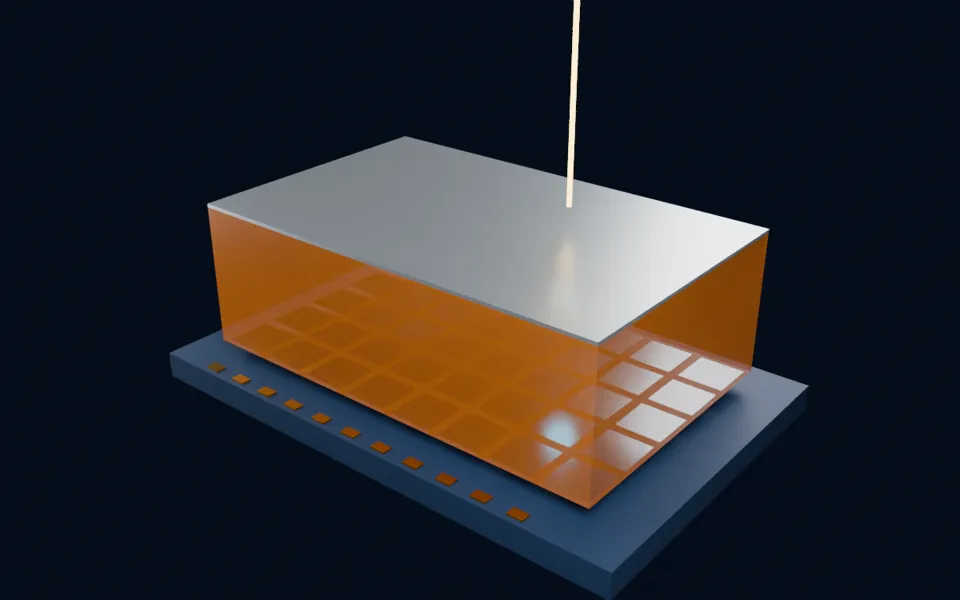
Projection radiography
X-ray imaging
Tube spectrum, attenuation, beam hardening, contrast and noise. Compare scintillator (energy-integrating) and photon-counting detectors.
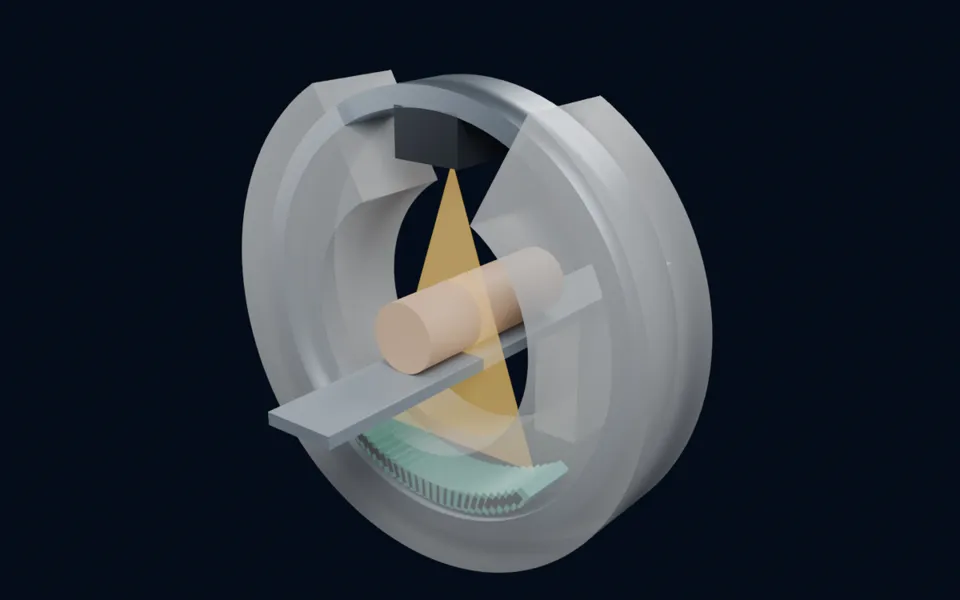
Sinogram & reconstruction
Computed tomography (CT)
Rotate the tube and detector, build a sinogram and reconstruct a slice with simple and filtered backprojection.
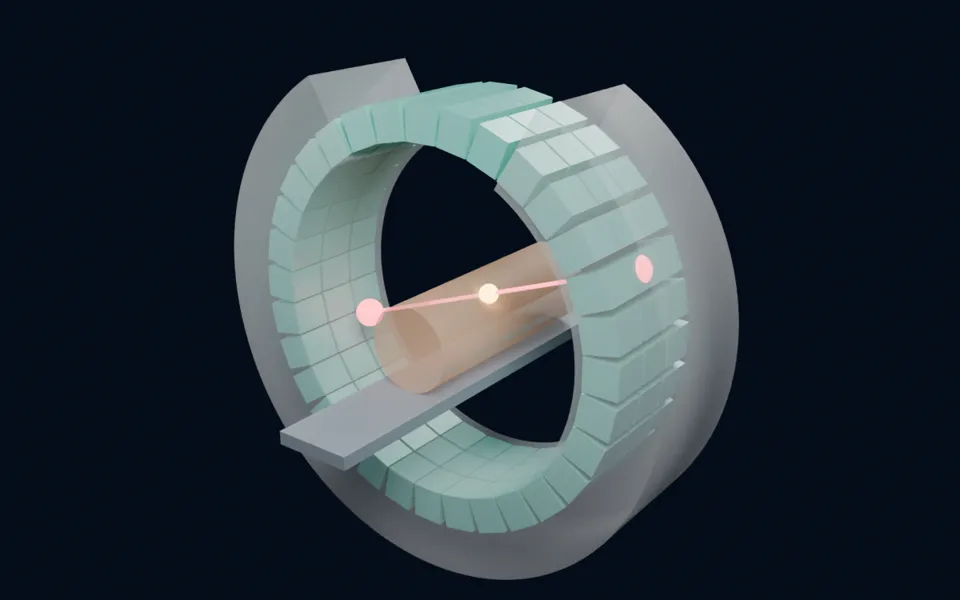
Coincidence detection
Positron emission tomography (PET)
Positron annihilation, back-to-back 511 keV photons, lines of response, scatter and random coincidences, time-of-flight.
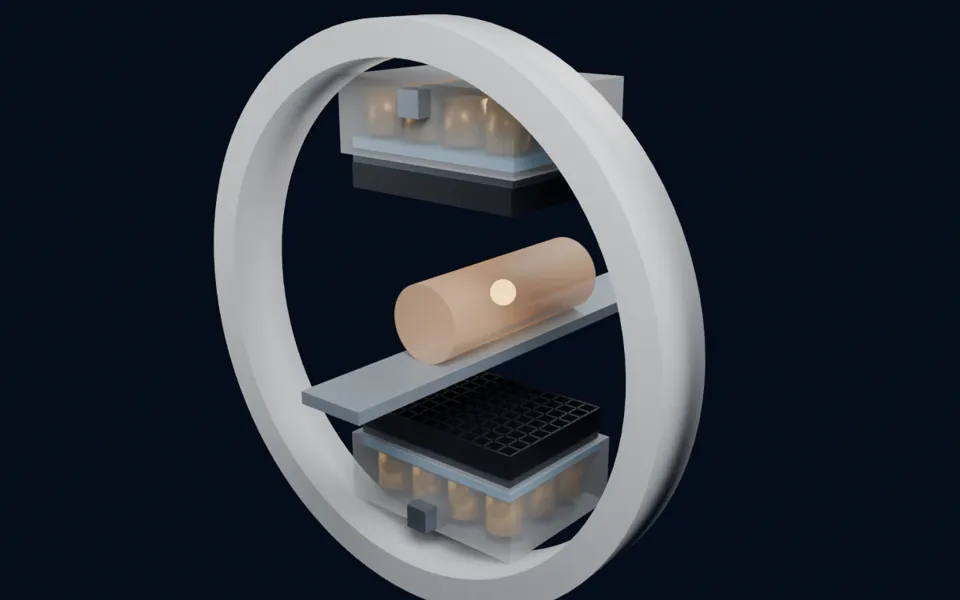
Collimated single photons
SPECT & gamma cameras
Tc-99m, lead collimators, the resolution-sensitivity trade-off and rotating gamma cameras.